Skip to content
You’ve probably spent more time reading about wrinkle treatments than you ever expected to. And the more you read, the harder the decision gets, because every option sounds like the right one depending on who’s writing about it.
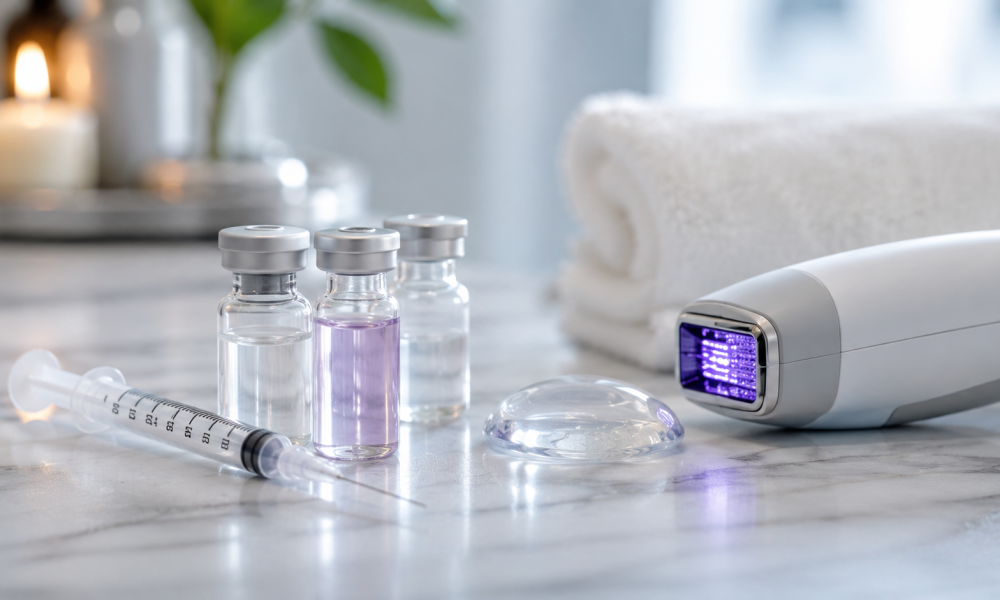
Botox is the most recognized name in facial rejuvenation, but it’s no longer the only serious option. Newer neurotoxins, dermal fillers, and energy-based skin treatments each solve a different version of the same problem. Choosing wrong doesn’t ruin you, but it does cost you time, money, and results.
Direct Answer
Botox is the most proven, flexible choice for dynamic wrinkles caused by muscle movement. It’s FDA-approved, fast, and predictable. But Daxxify lasts nearly twice as long, fillers address volume loss that Botox can’t touch, and laser treatments work on skin texture rather than muscle activity. The right choice depends on what’s actually causing your concern, not just where it shows up.
Key Takeaways
- Botox has been FDA-approved since 2002 and remains the most studied neurotoxin option available (U.S. Food and Drug Administration)
- Daxxify, approved in 2022, lasts an average of six months compared to three to four months for Botox, which changes the math on cost and convenience
- Fillers and neurotoxins treat fundamentally different problems: one restores volume, the other relaxes muscle movement
- Letybo, approved in 2024, is currently limited to frown lines only, making it a narrower option than Botox or Daxxify
- A consultation with a qualified provider like Ascend Regenerative is the only reliable way to know which treatment matches your specific anatomy and goals
Why Does Choosing a Facial Treatment Feel So Confusing?
The confusion isn’t accidental. It’s structural.
Every treatment category has a different mechanism, a different ideal candidate, and a different failure mode when misapplied. But most online content describes them as interchangeable options ranked by price or popularity, which is exactly the opposite.
The real problem isn’t picking the “best” treatment. It’s picking the right treatment for the right cause. A forehead line caused by years of muscle movement responds completely differently to treatment than a hollow under the eye caused by volume loss. Treating one like the other doesn’t just underperform. It can look wrong.
That’s the root of the confusion: people are comparing treatments when they should be diagnosing causes first.
What Actually Causes the Lines and Changes You’re Seeing?
Before any treatment comparison makes sense, you need to understand that facial aging happens through three distinct mechanisms, not one.
First, there’s muscle activity. Repeated expressions, squinting, frowning, and smiling create dynamic wrinkles that deepen over time. Second, there’s volume loss. Fat pads under the skin shrink and shift, creating hollows, sagging, and a flattened appearance. Third, there’s skin quality. Sun exposure, collagen breakdown, and texture changes happen at the surface level, independent of muscles or volume.
Neurotoxins like Botox address only the first mechanism. Fillers address the second. Laser and energy-based treatments address the third.
Most people over 40 are dealing with all three to some degree. That’s why the “which is better, Botox or fillers?” question is often the wrong question entirely.
The Honest Tradeoff Comparison: Botox vs. Its Main Alternatives
Here’s where the real distinctions live.
| Treatment | What It Treats | How Long Does It Last | Best Candidate | What It Can’t Do |
| Botox | Dynamic wrinkles (movement-based) | 3 to 4 months | Crow’s feet, forehead lines, frown lines | Volume loss, skin texture |
| Daxxify | Dynamic wrinkles (movement-based) | Average 6 months | Same as Botox, fewer appointments | Volume loss, skin texture |
| Letybo | Frown lines only | Similar to Botox | Narrow use case, frown lines specifically | Anything outside frown lines |
| Dermal Fillers | Volume loss, deep folds | 6 to 18+ months, depending on type | Cheeks, lips, under-eye hollows, nasolabial folds | Muscle-driven lines |
| Laser / RF Treatments | Skin texture, tone, collagen | Varies, often 1 to 2 years with maintenance | Surface pigmentation, laxity, fine lines | Deep volume loss, active muscle lines |
Daxxify was FDA-approved in 2022 and lasts an average of six months compared to three to four months for Botox (U.S. Food and Drug Administration, 2025). For someone who travels frequently or simply finds quarterly appointments inconvenient, that difference is genuinely significant, not just a marketing point.
Letybo, approved in 2024, is currently limited to treating frown lines only (U.S. Food and Drug Administration, 2025). That narrow approval makes it a poor substitute for Botox if you’re treating multiple areas.
The Contrarian Truth About Botox Most Providers Won’t Say Out Loud
Here it is plainly: Botox is often over-prescribed because it’s the easiest thing to say yes to.
It’s fast, familiar, and patients walk out feeling like something happened. But a significant portion of people who come in asking for Botox actually have volume loss as their primary concern, and no amount of neurotoxin will restore what isn’t there. The treatment that would actually help them is a filler, or a combination approach.
The second assumption worth challenging is that more frequent treatments mean better results. They don’t. Botox works by temporarily relaxing a muscle. Repeated treatments over the years don’t compound into better outcomes the way physical therapy or regenerative medicine can. The muscle relaxes, the line softens, the treatment wears off, and you repeat. That’s the ceiling.
Treatments that work with your body’s own repair mechanisms, like the regenerative approaches Ascend Regenerative specializes in, can produce structural changes rather than temporary ones. That’s a different category of outcome, not just a different product.
The “Right Fit” Framework: Which Treatment Matches Your Situation?
The Right Fit Framework is a decision tool for matching treatment type to the root cause rather than to the symptom location.
Use it like this:
- If your concern appears only when you make an expression (smiling, squinting, frowning) and disappears at rest, you’re dealing with dynamic wrinkles. Neurotoxins like Botox or Daxxify are appropriate. Daxxify makes sense if you want fewer appointments per year.
- If the concern is visible at rest, not just during expression, you’re likely dealing with volume loss or skin laxity. Fillers or energy-based treatments are more appropriate. Adding Botox on top won’t fix what’s already there.
- If the concern is skin tone, texture, or surface pigmentation, laser or radiofrequency treatments address the mechanism. Neither Botox nor fillers work at that level.
If you’re seeing all three: a combination approach planned by a qualified provider is the only honest answer. Ascend Regenerative builds treatment plans around this kind of assessment, not around a single modality.
Consider a typical scenario: someone in their late 40s comes in focused on the lines between their brows. They’ve had Botox before with modest results. On assessment, the concern is partly dynamic (muscle-driven) but mostly a volume shift in the mid-face that’s pulling the skin downward. Botox alone addresses maybe 30% of the problem. The full picture requires a different conversation.
That’s what a real consultation looks like. Not a quick agreement to do what you asked for.
If you’re at the point where you’ve done the research and you’re ready to have that conversation, Ascend Regenerative offers personalized consultations in Denville, NJ, for patients in Morris County. The goal isn’t to sell you a treatment. It’s to match the right approach to your actual anatomy.
What Botox Genuinely Does Well (And Why It’s Still the Benchmark)
Botox has been FDA-approved since 2002 (U.S. Food and Drug Administration, 2025). That’s over two decades of safety data, practitioner training, and refined dosing protocols. No alternative has that track record.
For dynamic wrinkles in the upper face, specifically forehead lines, crow’s feet, and the frown lines between the brows, Botox is fast, predictable, and well-tolerated. Results typically appear within a few days and peak around two weeks. There’s no recovery time. You can do it on a lunch break.
The mechanism is straightforward: the neurotoxin temporarily blocks the nerve signal that tells the muscle to contract. The muscle relaxes, the overlying skin smooths, and the line softens. When the effect wears off, the muscle gradually resumes normal function.
What it doesn’t do is change the underlying skin, restore lost volume, or produce any structural change that persists after the treatment wears off. That’s not a criticism. It’s just the honest scope of the treatment.
Who Should Think Carefully Before Choosing Botox?
Botox isn’t the right starting point for everyone.
If your primary concern is volume loss in the cheeks, temples, or under the eyes, Botox won’t address it. If you’re dealing with skin laxity or surface texture issues, you’re looking at a different treatment category entirely. If you want results that last longer than four months without repeat visits, Daxxify or a filler may be a better fit, depending on what you’re treating.
Botox also isn’t appropriate during pregnancy, for people with certain neuromuscular conditions, or for anyone with a known sensitivity to botulinum toxin proteins. A thorough intake process at a qualified practice like Ascend Regenerative screens for these before any treatment is recommended.
The most expensive mistake in aesthetic medicine isn’t choosing the wrong product. It’s choosing the right product for the wrong problem.
Frequently Asked Questions
How do I know if I need Botox or a filler?
The clearest signal is whether the concern appears only during expression or also at rest. If a line is visible only when you’re squinting or frowning, that’s muscle activity, and Botox addresses it directly. If the concern is visible at rest, it’s more likely volume loss or skin laxity, and a filler or energy-based treatment is a better fit. A provider who conducts a thorough facial assessment before recommending anything will tell you which option applies to your situation.
Is Daxxify actually better than Botox or just more expensive?
Daxxify isn’t universally better. It lasts an average of six months compared to three to four months for Botox, which means fewer appointments per year for the same area. If you’re treating multiple areas or trying Botox for the first time, starting with Botox makes sense because the dosing is more established and the shorter duration gives you flexibility to adjust. Daxxify is a strong choice once you know exactly what works for you and want to extend the interval between visits.
What happens if I stop getting Botox?
The muscle gradually returns to its normal activity level. Lines that were softened will reappear over time, generally returning to roughly their pre-treatment position. There’s no rebound effect where things look worse than before you started. The treatment simply wears off, and the baseline reasserts itself.
Can I combine Botox with other treatments?
Yes, and for most people over 40, a combination approach produces better results than any single treatment. Botox handles muscle-driven lines, fillers restore volume, and laser or radiofrequency treatments address skin quality. These work on different mechanisms and don’t interfere with each other when planned correctly. Ascend Regenerative builds combination plans based on a full assessment rather than defaulting to a single modality.
How long before I see results from Botox?
Most people notice the muscle relaxing within three to five days. Full effect is typically visible around the two-week mark. If results feel uneven or insufficient at two weeks, that’s the right time to follow up with your provider, not sooner.
Is Letybo a real alternative to Botox or just a new name for the same thing?
Letybo is a distinct botulinum toxin product with its own formulation, approved by the FDA in 2024. The key limitation is that its approval currently covers only frown lines, making it a narrower option than Botox or Daxxify. If you’re treating multiple areas, Letybo isn’t a full substitute. It may become more broadly applicable as its approval expands, but right now it’s a specialist tool, not a replacement.
What should I ask at a consultation before committing to any treatment?
Ask the provider to explain what’s causing the specific concern, not just what they recommend for it. Ask whether the treatment addresses the root cause or manages the appearance. Ask what happens if you’re not satisfied at two weeks. A provider who answers those questions clearly and doesn’t rush toward a treatment recommendation before understanding your anatomy is the one worth trusting.
The right treatment isn’t the most popular or the newest. It’s the one matched to what’s actually happening in your face. That’s the conversation Ascend Regenerative is built to have.
If you’re ready to stop guessing and get a clear answer about what would actually work for you, schedule a consultation at Ascend Regenerative in Denville, NJ. Serving patients across Morris County, the practice combines aesthetic expertise with the same diagnostic precision Dr. Fawad Mian brings to regenerative medicine.
About the Author
Ascend Regenerative is a non-surgical regenerative medicine and aesthetic practice based in Denville, NJ, specializing in advanced treatments for chronic pain, facial rejuvenation, and whole-body wellness. Led by Dr. Fawad Mian, the practice serves patients across Morris County seeking evidence-informed, personalized approaches that go beyond symptom management. From PRP therapy and stem cell treatments to Botox and hair restoration, Ascend Regenerative focuses on matching the right treatment to the right patient.