Skip to content
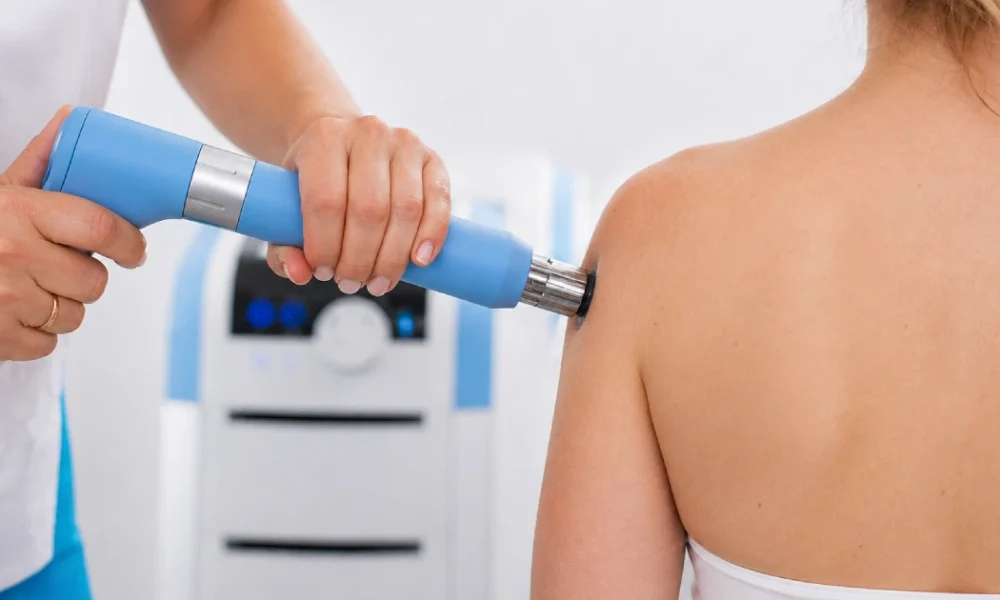
Table of Contents
Persistent joint and soft-tissue pain can gradually limit everyday movement. Reaching overhead, gripping objects, climbing stairs, or sitting comfortably can become frustrating when shoulder, elbow, knee, or back pain persists. For many people, these issues come from tissue damage that has not fully healed. That is where Shockwave Therapy at Ascend Regenerative in Denville, NJ fits in.
How does Advanced Shockwave Therapy provide relief from Shoulder, Elbow, Knee, & Back Pain?
Advanced shockwave therapy relieves shoulder, elbow, knee, and back pain by sending targeted acoustic waves into injured tissue. These pulses stimulate circulation, activate cellular repair, and reduce chronic inflammation.
What Advanced Shockwave Therapy Is And How It Works
Advanced shockwave therapy uses high-energy acoustic waves delivered through a handheld device. These pulses travel through the skin and reach deeper tissues where inflammation, scar tissue, or tendon damage may be present.
This process stimulates biological activity within the tissue. The waves trigger mechanical stress that signals the body to begin a healing response. As circulation improves and cellular activity increases, damaged areas receive the resources needed to repair.
Several key effects help explain why shockwave therapy for chronic pain is gaining attention as a regenerative treatment option:
- Increased blood flow to injured or inflamed tissue
- Activation of cells responsible for tissue repair
- Stimulation of collagen production in tendons and ligaments
- Breakdown of calcifications that restrict movement
Instead of covering up symptoms, the therapy works within the tissue itself to encourage recovery.
Why Shockwave Therapy Is Effective For Chronic Joint And Soft Tissue Pain
Chronic pain often develops when the body struggles to fully heal an injury. Tendons and connective tissue have limited blood supply, which can slow recovery and allow inflammation to persist.
When healing stalls, the tissue may become weaker, irritated, or sensitive to movement. This is common with long-standing tendon injuries, overuse conditions, and lingering muscle strain.
Shockwave therapy for chronic pain helps restart that healing process by stimulating biological activity within the damaged area. The acoustic pulses encourage new blood vessel formation and improve nutrient delivery to the tissue.
This renewed circulation can help damaged fibers repair themselves while also reducing inflammation that contributes to discomfort.
Patients often consider this treatment because it offers a non-surgical option that addresses the underlying tissue problem rather than simply managing symptoms.
How Shockwave Therapy Relieves Shoulder Pain
The shoulder is one of the most complex joints in the body and also one of the most vulnerable to overuse injuries. Tendons that stabilize the shoulder can become irritated or damaged through repetitive motion, sports, or everyday strain.
Shockwave therapy for shoulder pain is often used to treat conditions such as rotator cuff tendinopathy or calcific tendonitis. These problems frequently involve degeneration within tendon fibers or the buildup of calcium deposits that limit movement.
Acoustic waves delivered during treatment help address these issues in several ways:
- Stimulating circulation around damaged rotator cuff tendons
- Breaking down calcium deposits that restrict mobility
- Encouraging collagen production to strengthen tendon fibers
- Reducing inflammatory activity within the joint
As the tissue begins to heal, many patients notice improved mobility and less discomfort during daily activities such as lifting, reaching, or sleeping on the affected side.
How Shockwave Therapy Helps Elbow Conditions Like Tennis Or Golfer’s Elbow
Elbow pain is commonly associated with repetitive stress injuries that affect the tendons responsible for wrist and forearm movement. These conditions are often known as tennis elbow or golfer’s elbow.
Over time, repetitive strain can cause small tears and degeneration within the tendon fibers. Because this area has limited circulation, healing can be slow.
An elbow pain treatment approach that targets the tendon itself can help encourage recovery. Shockwave therapy promotes blood flow and stimulates cellular repair where the tendon attaches near the elbow. During treatment, the acoustic waves trigger mechanical stimulation within the tissue. This response encourages collagen production and strengthens the tendon structure.
Improved tissue quality can help reduce pain that interferes with everyday activities such as gripping, lifting, typing, or carrying objects.
How Shockwave Therapy Supports Recovery From Knee Pain
Knee pain can develop from tendon strain, repetitive impact, or chronic inflammation around the joint. Athletes and active individuals often experience conditions such as patellar tendinopathy, but knee tendon irritation can also occur from routine movement patterns.
Knee pain therapy with shockwave treatment targets these irritated tendons and connective tissues. The acoustic pulses stimulate biological changes within the damaged area, helping the tissue transition from a chronic inflammatory state into an active healing phase.
This process may help:
- Improve circulation within the patellar tendon
- Reduce persistent inflammation in overworked knee structures
- Encourage tissue repair that strengthens the tendon
- Support better knee stability and movement
As healing progresses, patients often notice improved tolerance for walking, exercise, and daily activities that previously caused discomfort.
How Shockwave Therapy Targets Back Pain And Muscle Trigger Points
Back pain often involves tight muscle bands, irritated connective tissue, or trigger points that create localized discomfort. These areas can become sensitive after repetitive strain, prolonged sitting, or muscular imbalance.
Back pain shockwave therapy works by targeting these areas of tension and reduced circulation. The acoustic pulses help loosen fibrotic tissue and stimulate blood flow within affected muscles. This improved circulation delivers oxygen and nutrients that support recovery while also helping reduce inflammation.
Shockwave therapy may also help deactivate trigger points that cause pain to radiate into surrounding areas. By improving tissue mobility and stimulating repair, the therapy supports recovery in muscles and ligaments that stabilize the spine.
What Patients Typically Experience During And After Treatment
Shockwave therapy sessions are typically performed by our provider at Ascend Regenerative using a handheld device placed against the skin over the affected area. The device delivers controlled acoustic pulses that travel into the tissue beneath the surface.
Because the treatment is non-surgical and does not involve injections, sessions are relatively quick and minimally invasive.
Patients receiving Shockwave Therapy for Pain in Denville, NJ at Ascend Regenerative often describe the sensation as rhythmic tapping or pulsing within the treated area.
The number of sessions recommended can vary depending on the severity and location of the condition. Some people notice gradual improvement as circulation and tissue repair increase over time.
This regenerative response is the goal of the treatment. Rather than temporarily masking pain, shockwave therapy stimulates the body’s natural healing mechanisms.
In addition to musculoskeletal care, specialized protocols such as Shockwave Therapy for ED in Denville, NJ, at Ascend Regenerative may also use similar technology to improve circulation in other areas of the body.
Glow Up Your Health
At Ascend Regenerative, advanced shockwave therapy helps patients recover from stubborn joint and soft-tissue pain. Find relief from back, knee, and shoulder pain. Call us today for your Shockwave Therapy session!